

Thank you for visiting
my website.
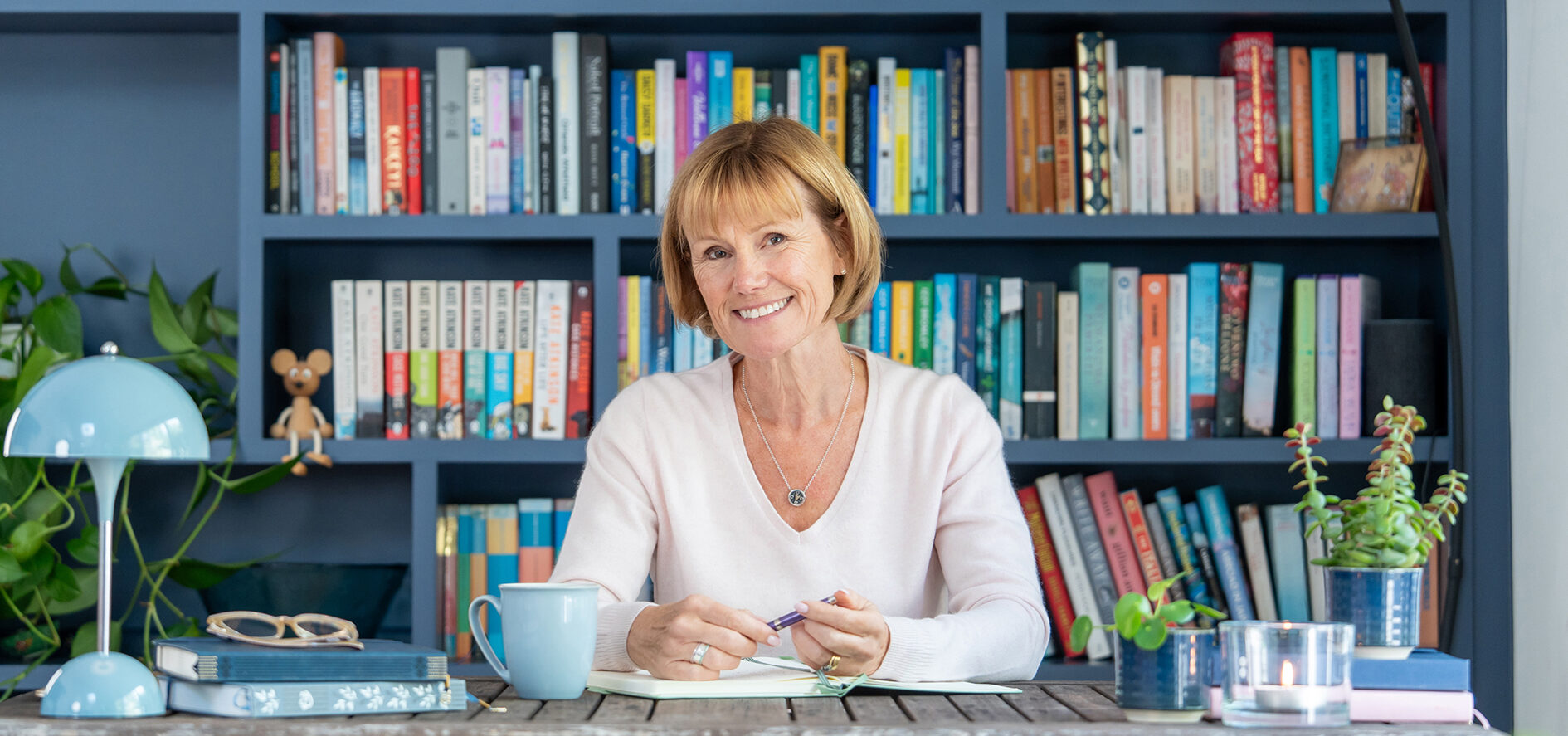
I’ve always been a big reader, but I didn’t publish my first book until I was fifty. Since then, I’ve barely stopped writing. Creating emotional, thought-provoking stories and memorable characters has become my passion, and I’m never happier than when I’m up to my neck in a first draft.
If you’re interested in my writing process or how I develop my novels, head over to the For Writers area where I share more behind the scenes details.
I live on the edge of the Yorkshire Dales so I do a lot of walking in the beautiful countryside nearby. I also love to travel – especially if my trip sparks an idea for a new story or setting.
To hear more, subscribe to In the Margins, a monthly letter where I share early news, stories about my inspiration and some of the ideas that don’t make it onto the page.
Family secrets are compelling because they turn the ordinary into the extraordinary. A family can look perfectly settled from the outside but one hidden truth can alter everything the characters believe about themselves. The stakes are emotional rather than abstract and the revelation does not simply solve a mystery. It changes relationships.
In my own novels, secrets often sit quietly inside families for years before something disturbs them. In Postcards From a Stranger, Cara discovers old postcards that make her question the story she has always been told about her family. In The Thing About Clare, a mother’s dying wish places an impossible burden on her children.
I think readers are drawn to these stories because we all know that our families work not only with truths but also with silence. There are the things we know, the things we suspect and the things no one talks about. A family secret novel gives us the satisfaction of discovery, but it also asks a deeper question: the truth can change the past, but what will it do to the future?
For me, the best family secret stories are not about the shock of the spilled secret. They are about discovering who we really are, forgiving those who covered up the truth and learning how to understand the people we thought we knew the best. It’s about the aftermath and not the secret itself.
I think a great book club book needs more than just a strong plot. There has to be something for readers to argue about, sympathise with and reconsider after the final page. The best discussion books leave space for different reactions. One reader may forgive a character. Another may not. One may see an act of love where someone else sees betrayal. Those differences of opinion are often where the best conversations begin.
Readers want to be carried along by the story, but they also enjoy themes that linger: family loyalty, moral choices, identity, grief, reinvention, love, memory and the consequences of keeping secrets. My books tend to place ordinary people under emotional pressure and ask what they will do when the safe choice and the right choice are no longer the same. These are the ideas that stay with you after you finish reading and which are worthy of discussion.
An Unwanted Inheritance is a clear example. Three siblings discover a suitcase full of money after their father’s death. The question is not only what they should do with it, but what the money reveals about need, greed, loyalty and principle. In A Borrowed Path, four generations of women find themselves under one roof, but they fail to understand each other because they don’t share a version of their past. The book helps them to unpick that.
For me, a good book club novel should entertain, but it should also leave readers asking themselves what they would have done in similar circumstances.
I am drawn to writing about mother-daughter relationships because they carry so much expectation and are often the most complicated of all our relationships. A mother is never just one thing to her daughter. She may be protector, critic, example, warning, mystery, burden, best friend or stranger – sometimes all at once.
Also, the mother-daughter relationship changes across a lifetime. A daughter may begin by needing her mother, then judging her, then resisting her and finally seeing her and a life that existed before motherhood. This can lead to compassion and understanding and this shift in their relationship fascinates me
For example, in In Another Life, Bronte’s grief for her mother Loretta becomes entangled with the discovery that her mother had a past no one in the family understood. In The Last Piece, the arrival of Marnie as a disrupter brings Cecily’s daughters closer but also allows them to see a side to their mother that they could never have imagined. In Late in the Day, Harriet’s decision to leave her husband and begin again forces her adult children to see her not simply as their mother, but as a woman making choices they may not approve of.
These relationships can work so well in fiction because they are intimate, layered and rarely simple. Love can sit beside resentment. Protection can become control. Silence can look like kindness until the truth comes out. This is a rich seam for a novelist like me.
Coming from a small family myself, I am drawn to families with lots of children. I love how they all remember the same childhood differently depending not only on birth order but also because of the way they are perceived by their brothers and sisters, their parents as well as how they see themselves. They carry old alliances, grudges and roles long after everyone is supposed to have grown up.
A good sibling relationships novel often begins when the family system is disturbed and suddenly the adult characters find themselves behaving like the children they once were.
In The Thing About Clare, the Bliss siblings believe they know which of them is their mother’s favourite and who is the black sheep. This mistaken perception colours not only their childhoods but their adult lives too and has to be tested when their mother makes an unpalatable death-bed request. In An Unwanted Inheritance, three siblings and their families are tested by the discovery of unexpected cash which exposes differences in morality, need and loyalty that might otherwise have remained hidden.
Multi-generational family stories are fun to write because in them the past refuses to stay neatly in the past. Decisions made by one generation affect the next in ways that it’s hard to anticipate, shaping homes, marriages, parents, ambitions and secrets.
I am particularly interested in the way women in different generations misunderstand each other. A grandmother may look stubborn to her granddaughter because the granddaughter cannot see what she survived. A mother may seem controlling because no one has ever asked what fear is driving her. A daughter may appear selfish when she is actually trying to break a pattern.
In Where the Story Starts, an unexpected meeting in one generation opens a terrible secret from another which, once uncovered, has an impact on everyone. In In a Single Moment, a decision by the mothers from one generation has devastating consequences for their children in the next.
The pleasure for me in writing a multi-generational novel lies in creating a repeating pattern. At first, the reader sees the separate threads of the story but gradually the whole picture emerges and that explains the present.
A second chance story shows us that mistakes, losses, disappointments and wrong turns don’t have to be the end of the narrative. There may still be another decision, another relationship, another version of yourself which will change your life.
These second chances don’t have to be dramatic. Sometimes they are quiet. A character returns home and begins to see her past differently. Someone makes a friendship they did not expect. A woman who has spent years in one role begins to ask what she wants next. These stories are hopeful and uplifting because they can be so relatable. Who wouldn’t want to undo a mistake or have another try at life?
My novel Reluctantly Home is a second chance story. Pip’s life is punctured by a tragic accident and she retreats to the rural farm she has tried to leave behind, but through her friendship with an elderly actress, Evelyn, she is able to take stock and rebuild something new.
For me, second chances in fiction are not about wiping the slate clean. They are about living with what has happened and still choosing to grow. That is why readers respond to them. They offer hope without denying consequence.
My novels are contemporary stories about families, secrets and the choices that shape us. They are not crime novels, although there may be mystery. They are not romances, although love matters. They are not purely literary novels, although they are interested in character, theme and emotional truth.
Contemporary book club fiction sits between commercial readability and literary depth. It is usually accessible, emotionally engaging and strongly plotted, but it also gives readers something to think about after the story ends. It is fiction designed to be read with pleasure and discussed with interest.
The term can cover many kinds of stories, but the books often share certain qualities: layered characters, moral questions, family dynamics, secrets, relationships under strain and choices that do not have easy answers. The pace matters, but so does the emotional consequence. A book club novel should make readers want to turn the pages, then make them want to talk about why the characters behaved as they did.
My books all begin with a strong narrative question, but the part I love to explore is what that question does to the people involved. Who tells the truth? Who protects the family? Who gets hurt? Who is forgiven?
For me, contemporary book club fiction is fiction with compelling characters and a moral dilemma at its heart.
I want my readers to believe in my characters, to understand what they want and to care about what they stand to lose.
I think emotional fiction works best when it is rooted in lives that are recognisable. Family bonds, old grievances, missed chances, secrets kept too long, friendships found late, love expressed imperfectly. These are things that affect everyone and I want my books to put the reader in the heart of the dilemma and feel what the characters feel, whether they would do the same or not.
I try to write novels that leave readers satisfied but also with a question to ponder. For example, The Last Piece explores friendship, forgiveness and the stories people carry in silence and Late in the Day asks whether later life can still contain risk, desire and reinvention.
I believe a novel will stay with a reader when it gives them something more than a neat ending. The books I love most are the ones that make me close the final page and sit quietly for a moment. That’s what I hope my own stories do too.